“All cosmetic samples for just 10,000 won (US$7.2) .” Such listings have become increasingly common on Danggeun Market, South Korea’s popular secondhand trading platform, reflecting a growing divide in the nation’s beauty market amid persistent inflation.
While some consumers hunt for bargain cosmetics and sample-size products, others flock to luxury brands like Prada Beauty, which opened its first South Korean store in August despite economic headwinds. The contrast illustrates the stark polarisation of consumption patterns in one of the world’s most beauty-obsessed markets.
According to industry experts, this bifurcation in cosmetic consumption has become increasingly pronounced as inflation continues to squeeze household budgets.
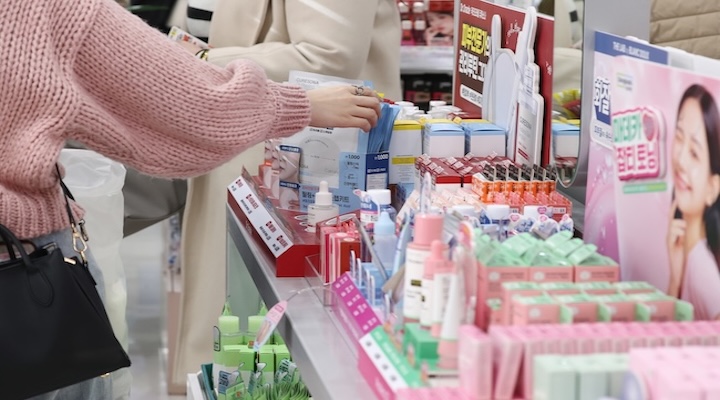
At one end of the spectrum, teenagers and budget-conscious consumers are driving demand for affordable alternatives. Daiso, a discount retailer, has seen dramatic growth in its beauty segment, with sales of basic skincare products surging 240 per cent and makeup products increasing 130 per cent through October compared to the same period last year.
“Teenagers are currently driving cosmetic trends,” said an industry insider, who spoke on condition of anonymity.
“They’re particularly price-sensitive given their reliance on allowances, with even $0.72 to $1.43 differences affecting their purchasing decisions. Unlike older consumers, they show little brand loyalty and will flock to products that gain a reputation for good quality at low prices.”
Major Korean cosmetics companies have taken notice. Industry giants like Amore Pacific, LG Household & Health Care, and Aekyung Industrial are now supplying products priced under $3.58 to Daiso. Even convenience stores have joined the trend, with GS25 offering $5 face masks and CU launching $2.15 basic skincare items.
However, the luxury segment tells a different story. Lotte Department Store, Shinsegae Department Store and Hyundai Department store have all seen double-digit increases in sales of luxury cosmetics this year5.
Capitalising on this robust demand for luxury beauty products, Prada Beauty’s August launch drew 1,200 visitors daily to its pop-up store, despite pricing its products above established premium brands like Lancôme and Estee Lauder.
“Economic downturns and high inflation typically intensify consumption polarisation, and we’re seeing this clearly in cosmetics,” said Lee Eun-hee, a consumer economics professor at Inha University.
“While teenagers and the working class gravitate toward extremely affordable products, premium consumers continue to seek high-end items. This polarisation is likely to persist as long as consumers continue to feel economic pressure.”
The trend has prompted traditional retailers to adapt. Coupang, South Korea’s largest e-commerce platform, recently launched RLUX, a specialised delivery service for luxury beauty brands like Estee Lauder and Rene Furterer, betting on the continued growth of the premium segment despite economic uncertainties.
Even mid-range brands are pursuing dual strategies. Shinsegae International’s house brand Yunjac introduced Alphanax, a premium skincare line exclusively for department stores, priced at twice its regular products and featuring patented anti-aging ingredients.
This story was originally published by Lina Jang, via Korea Bizwire.