Home improvement is one of the most – if not the most – cyclical of all retail categories and the one most susceptible to weak consumer confidence. So it is hardly surprising that, as Thailand’s DIY market, the biggest in Southeast Asia, struggles with weak consumer confidence, household debt, rising energy costs and an otherwise choppy macroeconomic backdrop, retailers are getting less productivity out of their giant warehouses. Still, they keep adding stores, which means same-store sales will continue to decline and competition for customers will intensify. As material costs rise, that will hurt profits too. Both the top and bottom lines are being squeezed.
Home Pro’s DIFY business shines as DIY stagnates
The two biggest players in the market by revenue are Home Pro and Thai Watsadu. Home Pro has a store network of 126 in Thailand and seven in Malaysia, and it recently announced that its revenues for the full year of 2025 fell by 2.8 per cent from the previous year, to 70.6 billion baht (US$2.2 billion). Same-store sales were down 6.4 per cent, and momentum was decelerating in the fourth quarter. The company managed to take in a net profit of 6.0 billion baht (US$187 million), down nearly 8 per cent on 2024.
The company, oddly, is repeating the mantra that its sales growth path is “sustainable”, despite having now experienced two years of consecutive revenue declines. To gain market share, it is busy opening new warehouses and plans to have 10 more open by the end of 2026.
One of the bright-line items on Home Pro’s income statement, though, is its home services business, which has steadily generated higher revenues and grown by just over 9 per cent in 2025 as customers turn from DIY to DIFY. The services include installation, renovation (bathroom and kitchen), maintenance and repair.
The company also has an ancillary business as a mall landlord: it derives rental income from its Market Village shopping malls in Hua Hin, a popular resort on the picturesque Gulf of Thailand, in Rayong, in the southeast, and adjacent to Suvarnabhumi Airport, the country’s main international entry point. Income from the mall business grew by 4.2 per cent over the year. Home Pro anchors each centre. Unfortunately, many of the tourists coming to Hua Hin are from Europe, and it is unclear how the current Middle East conflict will affect visits to the city in 2026. Certainly, the outlook is poor.
Thai Watsadu runs neck and neck
Thai Watsadu is the biggest part of the hardlines arm of Central Retail Corporation. It is Home Pro’s fiercest competitor, and company leadership has been clear that it will not be content to be a runner-up in Southeast Asia’s home improvement category. Like Home Pro, it has been on an expansion path with its store network, and the hardlines group as a whole reached sales of about 72.0 billion baht (US$2.2 billion) in 2025, putting it on par with Home Pro. But as with Home Pro, the productivity of its existing stores is in decline: same-store sales for its hardlines category in Thailand alone fell by 5 per cent for the year.
In any event, Central doesn’t derive all of its hardline sales from the DIY warehouses themselves: it owns a variety of banners that sell electronics and white goods (Power Buy), office supplies and stationery (Office Mate and B2S), and home furniture (BnB Home). Also, the 2025 numbers are still graced with the ill-fated Nguyen Kim appliance chain in Vietnam, which Central divested in December and will be missing from the 2026 numbers. (The divestiture of Nguyen Kim will, however, actually boost same-store sales beginning the first quarter of 2026 when it goes out of both the base and current year.)
At the end of 2025, the Thai Watsadu chain had grown to a fleet of 88 stores, with 2 stores added during the year, and 3–5 more are planned to open this year.
The squeeze is on Siam Global House
Home Pro and Thai Watsadu compete in the home improvement market with several smaller retail chains that operate the same vast DIY warehouses. Among these is Siam Global House, which is headquartered not in Bangkok but in the small northeastern provincial capital of Roi Et. It has a massive network of 96 warehouses in Thailand. The company notched up revenues of 32.4 billion baht (US$1.0 billion) in 2025, a 1.9 per cent decrease from a year ago, despite the addition of six giant superstores. Net profit fell by 20 per cent. Same-store sales declined in the mid-single digits, and given current economic conditions, it is difficult to see significant improvement in 2026.
For now, smaller formats have an advantage
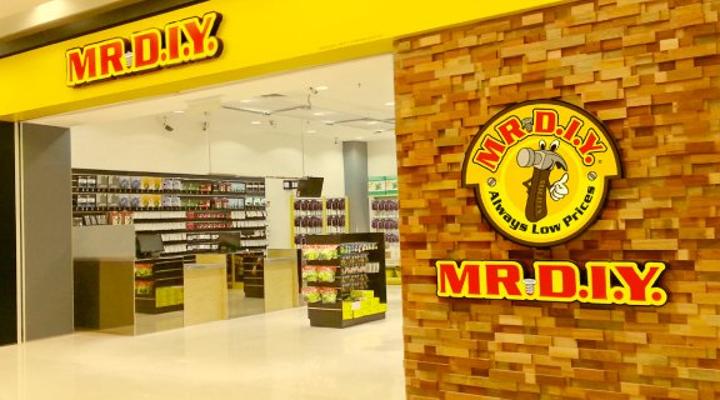
One of the chains better placed to prosper in Thailand in the short term, while broader economic pressures persist, is Mr DIY, which has grown from its original base in Malaysia to operate more than 2,000 stores across 10 countries. Approximately 900 of these are in Thailand. Mr DIY is highly visible in Thailand because of its small formats that offer a limited range of DIY goods, including tools and small home decor products, and its ability to fit easily into conventional malls and more congested shopping places: these stores don’t require massive plots of cheap land on the outskirts of cities. Their less cyclical merchandise offering gives them a lifeline in the short term, while the weakening economy and external conflicts impact home improvement warehouses more deeply.
Looking forward: not a good look
Throughout 2025, it was still possible to remain optimistic despite external pressures that were weighing heavily on the Thai economy and home improvement stores. Now, the outlook is for a much slower recovery with the prospect of rising materials and operating costs, while the conflict in the Middle East is not yet in sight. Home improvement retailers have seen this movie all too often in the 2020s, beginning with the Covid nightmare and running through the Ukraine conflict and now the Middle East. They’ve survived it before, and they will again, but the recovery that was set for 2026 will have to wait a little longer.
Further reading: How three regional conflicts are reshaping tourism retail