
Everyone is chasing loyalty programme perfection, but we reached it years ago. It’s called a stamp card. Go to your local cafe/hairdresser/artisan patisserie (must be nice). Take out your humble, well-worn piece of cardboard. Watch that satisfying little stamp complete a row. Enjoy your free coffee/haircut/pandan croissant. Perfection. But now there’s activating an offer, checking which products qualify, calculating a points multiplier and discovering your reward expired yesterday. Sadness.
ness. Somewhere along the way, brands saying thank you became brands giving homework.
More than a discount
In a recent piece, academics Sanjit K Roy and Saalem Sadeque, argued that trust, commitment and perceived value are key drivers of loyalty programme engagement. Ultimately, it’s about how customers feel.
Navigating multiple browser tabs and logging in to save five cents on an offer that requires a 26-minute drive is an act devoid of any feelings. Positive ones, anyway.
We spend a lot of time discussing what loyalty programmes can do for businesses. More visits, fuller carts, more in-depth data. But for customers, the reward is only part of the experience. There’s everything around it too: how easy it is to understand, how much work it takes and how it feels when it finally lands.
That whole journey is a signature brand moment. And in trying to make loyalty more sophisticated, we’ve engineered the fun right out of it. So let’s try and find it again.
Put the wins within reach
McKinsey’s 2026 Australian consumer loyalty research puts quickly accumulating and redeeming points right at the top of customers’ list of priorities. Programmes offering near-term gratification, visible progress and easy redemption also performed better on member satisfaction. Back to stamp cards. You know why they work so well? You can see your progress. You know the prize, and the prize is something you already like.
Digital programmes can absolutely give customers that same satisfaction. Whatever’s happening behind the scenes, the person holding the phone just needs to know exactly what they’re getting and how close they are to it. Australian supermarket group Woolworths’ Everyday Rewards programme has an easily understood core payoff: reach 2,000 points and get AU$10 off a future shop. There are other offers around it, but the basic exchange is clear.
It’s simple, with a clear sense of progression. And, breaking: everyone likes money. With around 15 million registered members, over half of Australia’s population, Everyday Rewards is doing something right.
Know your customers
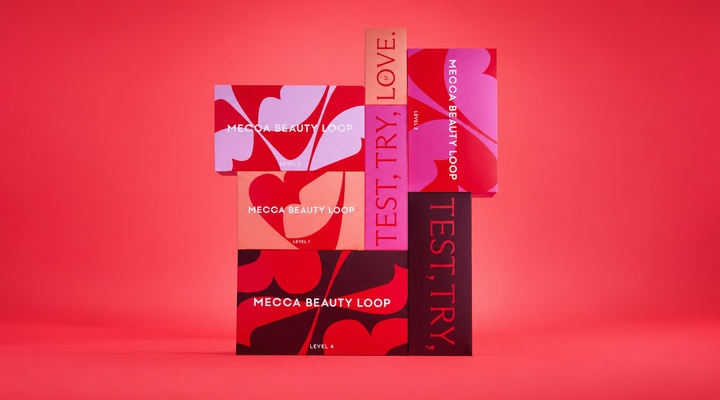
Those who worship at the shrine of Mecca, the beauty retailer operating across Australia and New Zealand, know that Beauty Loop is the gold standard for a loyalty programme. Gifts, samples and experiences tap into the pleasures of beauty shopping: discovering products, trying something different, finding a new favourite.
At its foundation, it’s genius. Rewards give a reason to come back in-store, to browse, to linger at the lip bar. Mecca knows what customers want from Mecca. They take you behind the velvet rope into a club that gets your skin type and your obsessions and your alarming number of face serums. Climbing tiers feels less like spending and more like levelling up your routine.
Beauty Loop is more than a great name; it’s proof that rewards don’t have to be monetary. There’s a commercial upside to that, too. If the main attraction is always a discount, you risk teaching customers to wait until you’re cheaper. Samples, experiences and access give them more of what they love about your brand, while giving you something to offer beyond another percentage off.
The reward feels like part of the brand, not something bolted onto it.
Remove the barriers
With My 7-Eleven, the convenience chain’s loyalty app, every seventh visit to a 7-Eleven can snag a reward. Lovely. Real stamp card energy. But members have seven days to select that reward, and visit tracking pauses until they select it or the selection period expires. Treats, hidden behind admin. Seemingly tiny, sure, but people are busy, and these tasks have a habit of piling up. Activate this. Spend by then. Log in, remember your password? No? We’ll email you, did you get it? Maybe try your spam – and you’ve lost them.
Each step takes a little more attention from someone who is, quite simply, not thinking about your brand as much as you think they are. At some point, you stop rewarding loyalty and start asking customers to prove theirs.
Australian burger chain Grill’d’s also-perfectly-named Relish programme offers smaller rewards along the way: chips after a second eligible visit, a drink on the fifth, a burger on the eighth. There’s a taste of something to enjoy before the final prize. In short, the reward shouldn’t be the only rewarding part.
Land the moment
You’ve made the offer sound irresistible. Your customer wants it and has done what you asked. Please let them have it.
This is where all that lovely work can come unstuck. The page won’t load, or the product is unavailable. The poor sales assistant doesn’t know what offer you’re talking about. There’s a queue forming behind you, and someone is audibly mumbling “come on”. There’s no fun in sight.
Follow the reward all the way through to the end and check how it sounds along the way. If the offer sounds fun and the redemption sounds like a bank form, something’s gone wrong.
Grill’d’s “Burgers with benefits” and “BDAY CHIPS FOR DAYS” bring an energy that’s fun to be around. You can hear the brand saying them. Carry that personality through.
You don’t need confetti every time someone opens the app. Save the celebration for something worth celebrating, then make the handover feel good. A warm “this one’s on us” can make a small token feel like a legitimate act of appreciation.
So, check your rewards. Make sure everything in the process, from the name to the mechanics to the language, feels easy, enticing and unmistakably you.
Your customers have bills to pay, appointments to remember and actual homework to help with. Let this be the fun bit. Or, you know. You could hand out stamp cards.
Ben Ashley is a senior writer at brand language studio XXVI, part of Principals.
Further reading: Will your loyalty program win over a shopping assistant?