
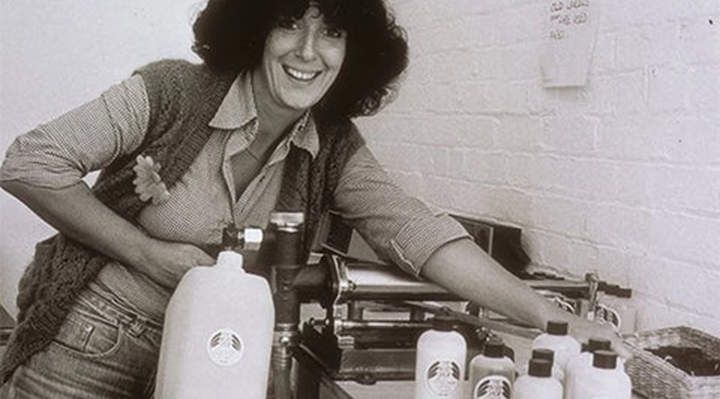
In 1976, The Body Shop opened its first store in Brighton, England, under founder Anita Roddick. The brand was built on a pointed rejection of commercial beauty aspiration, with refillable bottles, handwritten signage and a business model that treated retail as a vehicle for social change. At a time when the global beauty industry leaned into glamour, excess and exploitation, Roddick positioned the brand as an antidote that foregrounded ingredient sourcing, human rights and environmental respons
ibility – long before those ideas entered the commercial mainstream.
Today, The Body Shop’s retail footprint has mirrored trends and consumer expectations, with stores evolving from product-led environments into spaces that foreground experience, education and community engagement. Khan Wyman, New Zealand business owner and general manager of The Body Shop, told Inside Retail the brand’s enduring challenge is to translate its legacy into something that resonates with a younger, more sceptical customer. “The Body Shop continues to stand firmly on the ethical foundations Anita Roddick created and we remain a brand that challenges the status quo and fights for fairness,” he said, adding that local relevance has become central to that effort. “Keeping activism authentic and locally relevant is key to maintaining credibility with our customers.”
That ethos is now being expressed through its “Rebellious by Nature” platform, which seeks to reconnect the brand’s original spirit of disruption with contemporary retail expectations. Wyman described it as a distillation of the company’s history into a format that can be experienced in-store and across campaigns. “Rebellious by Nature is really the essence of our 50-year history. The Body Shop has always been a retailer unafraid to do things differently, and this platform brings that spirit to life,” he said. “Customers have always known The Body Shop as a pioneer within the beauty industry, embracing our ethically produced range that highlights nature’s best, and their in-store experience with spaces that invite them to play, discover, and learn through storytelling.”
The brand is seemingly balancing innovation with familiarity as product strategy becomes a point of continuity and its subsequent return of legacy products has proven to be effective, tapping into nostalgia while reinforcing brand identity. “Listening to our customers is at the heart of how we make decisions,” Wyman said. “A great example is the return of the 90’s icon, Dewberry, which has been a huge success this year. There’s more innovation to come, but everything starts with the voice of the customer.”
The Body Shop’s history, though, has not all been straightforward. The company branched out across the UK, Europe and into Asia throughout the 1980s and 1990s, and by the mid-1990s, The Body Shop had more than 2000 stores globally with a listing on the London Stock Exchange. Campaigns against animal testing and for fair trade ingredients became central to its identity, with a product range ranging from body butters to tea tree oil.
The 2000s brought a sharper pressure, as The Body Shop moved into the orbit of bigger players. Its 2006 sale to L’Oréal for £652 million drew immediate scrutiny, given the group’s links to animal testing and raised a question about whether an activist brand could hold its shape inside a multinational. At the time, Roddick pushed back at the claims stating the activism would not change. “That’s part of our DNA. But having L’Oréal come in and say we like you, we like your ethics, we want to be part of you, we want you to teach us things, it’s a gift. I’m ecstatic about it. So I don’t see it as selling out.” In 2017, it shifted again to Natura & Co, a more natural fit on paper, before another turn in 2023 with Aurelius, and then Auréa Group in 2024.
Fifty years on from its creation, The Body Shop’s trajectory will most likely be defined by how effectively it can balance heritage with reinvention, particularly as consumers demand greater transparency and accountability from the businesses they support. For Wyman, the opportunity is clear, but so too is the risk. “The biggest opportunity for heritage brands is to stay true to their values,” he said. “The risk lies in losing sight of that authenticity. Brands that remain consistent, transparent, and connected to their community will continue to earn trust and loyalty.” Fifty years on, the brand remains a steadfast example in how retail can carry meaning beyond transaction, provided it continues to evolve without forgetting what made it matter in the first place.
Further reading: The Body Shop on what it takes for a beauty brand to be completely vegan