
No matter how interesting the retail industry is – and it’s arguably getting more interesting every day – the quarterly reports of the big retail landlords in Singapore are almost always predictable and dull. Investors like predictable and dull, so this is a compliment and not a criticism. It reflects an underlying nose-to-the-grindstone kind of diligence on the part of retail property owners, a belief that even when things get rocky on the consumer side, it is always business as usual in
in the malls: they will invariably be able to find an answer to challenges by juggling tenancies, creating social spaces, and hosting what seems to be a never-ending cycle of community events.
So it was again in the third quarter. While the situation with retail sales was quite respectable – sales rose, at least on a year-on-year basis in all three months of the quarter, peaking at 5.3 per cent growth in August – rents also edged up and can be expected to continue doing so because new retail floor space is going to be well below the historic average through at least the end of the decade. What new space there is will do little more than match demand by retailers, particularly those from the food and beverage, health and beauty, and fashion accessories categories which have experienced the strongest sales growth this year. Orchard Road, secondary downtown shopping precincts and suburban areas are all seeing upward pressure on occupancy costs for retailers. In this respect, Singapore is in a similar situation to other major Southeast Asian cities like Bangkok and Ho Chi Minh City.
CapitaLand delivers again
CapitaLand’s retail/office focused real estate investment trust (REIT) posted another good quarter, with strong metrics for revenues, property income and rental growth. Although both revenues and property income are slightly down on a year ago (-4.4 per cent and -5.2 per cent respectively), the numbers need to be understood in the context of downtime due to repositionings or upgrades at several of the malls, and the divestment of a couple of others. Retail occupancy is a lofty 97.3 per cent and rent reversions (aka “rent spreads”, the difference between average committed rents for new leases and the average for expiring leases) were a positive 4.6 per cent. The metric was almost identical for downtown and suburban malls. About half the leases in the retail portfolio (by gross rental income) will expire over the next three years, a normal expiration profile that also provides plenty of opportunities to keep the tenant mix fresh. New and renewed leases so far this year have affected 16 per cent of the retail portfolio (614 tenants) and the retention rate, by leasable area, is 84 per cent.
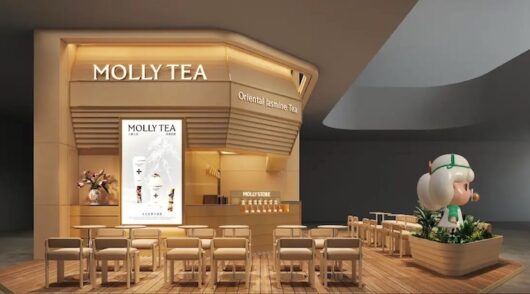
How have the tenants themselves been travelling? Shopper traffic for the first nine months was up 2.3 per cent and tenant sales per square foot, a key measure of portfolio health, were up 2.1 per cent with slightly stronger growth in the downtown. Much has been made in the press about the uptick in the number of store closures by F&B brands, but these have been more than offset by expansions. Luckin Coffee, Mixue and Heytea are among the Chinese brands that have arrived in full force. And CapitaLand itself has also been busy with new and diversified higher-end F&B offerings, including Osteria Mozza and Tavola Aperta (from Italy, at Ion Orchard and the Atrium at Orchard), Ojeje (from Korea, at Raffles City), Liora (Korea, Clarke Quay), Souper Tang (Malaysia, Raffles City) and Gatten Sushi (Japan, Ion Orchard).
Tampines lives again, a year on from Isetan’s closure
The third quarter also saw the upgrade of Tampines Mall, in the east of the island, advance further towards completion. Tampines is of particular interest because its upgrade followed the closure of the Isetan department store anchor a year ago and, like the Isetan that anchored CentralWorld in Bangkok, its departure presented a great opportunity to carve up the space and give it a complete makeover. (In case you haven’t seen the Isetan carve-up in Bangkok, you can read about it here.) The makeover in Singapore is breathing fresh life into a moribund space with the addition, so far, of 16 new brands in the health and beauty, jewellery and fashion categories. These include large spaces allocated to Sephora and high-end Chinese fashion brand Meilleur Moment, and additional boutiques for Goldheart, SK Gold, CC Primo (watches), Braun Büffel (leather goods), Chanel Beauty and YSL Beauty.
Rising population and healthy outlook for the economy
The Singapore government has strengthened its forecast to mid-single-digit GDP growth for the island state after originally only predicting 1–3 per cent growth. As nice as this is, it also illustrates the limited value of these growth forecasts in the first place. (In economics, the closer you get to the time of an event the easier it is to forecast it and the less useful the forecast is, even if it turns out to be right.) Good for the retail industry is population growth, up 1.6 per cent in the year to June, to 6.21 million. This is not so much because Singaporeans are having more babies, as it is to do with the influx of foreign residents. Either way, retailers will take it.
Meanwhile, tourist arrivals are very slightly down so far on last year but the current government forecast is for the number to top 18 million by the end of the year, eclipsing last year’s level of 16.9 million.
The largest retail development expected to come online in Singapore over the next five years, Phase 1 of the Tanjong Katong Complex about 10km east of downtown, is a very modest 180,000sqft of net leasable area. The fight for prime retail space is therefore not expected to relent, although some of the excess demand will be absorbed by e-commerce which has crept up over 18 per cent of total retail sales year to date after dropping to just over 15 per cent in 2025.
The bottom line is that from a landlord’s perspective it will be business as usual, with noses to the grindstone, dull, predictable and delivering for investors and consumers alike.
Further reading: Why are Chinese retailers looking overseas for growth?