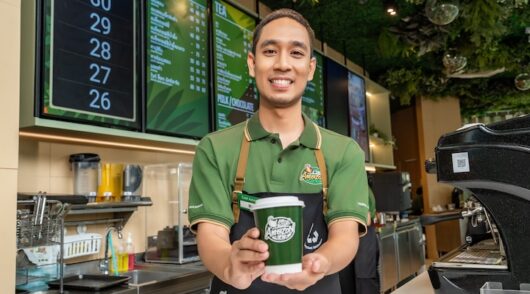

For Chinese ice cream and beverage chain Mixue, which already has more stores than Starbucks or McDonald’s, a cheerful snowman mascot on São Paulo’s most famous avenue signals a new phase of its global expansion. Mixue’s first Brazilian location, opening on Saturday, marks the brand’s arrival in South America amid a fresh tide of Chinese investment, building on economic ties that have already displaced the US as the continent’s top trading partner. But unlike prior waves of capital sp
tal spending that Beijing steered to Brazil, concentrated on a handful of huge hydropower dams and oil projects, an array of Chinese businesses are now courting the country’s more than 200 million consumers.
The focus on expanding foreign markets for Chinese goods comes as Beijing confronts rising trade barriers in the US, the long-time main consumer of its world-leading exports.
Chinese direct investment doubled to US$4.2 billion in 2024 across 39 projects in Brazil, making it the world’s third-largest recipient of Chinese investment, according to the latest available data from the Brazil–China Business Council.
Adding to the surge, Mixue plans to invest around 3 billion reais (US$590 million) to start selling lemonade, jasmine tea and ice cream treats in South America’s largest economy under the banner of a cartoon snowman at odds with the tropical climate.
Mixue aims to open between 500 and 1000 stores in the country by 2030, including franchisees, Mixue Brazil CEO Tian Zezhong said.
The fast-food chain joins Chinese firms ranging from delivery apps and electric vehicle makers to consumer electronics firms betting on Brazilian consumers who have warmed to Chinese brands considered competitive on both price and quality.
“Once you start buying Chinese products, it’s very hard to switch back to others because of the value for money, the quality, and how they stand out in terms of design and delivery,” said 30-year-old Bianca Gunes, strolling past Mixue’s new Brazilian store at the Shopping Cidade São Paulo.
High-tech tastes
Chinese electronics maker Huawei has a prime location at the mall’s entrance. After nearly three decades in the country, Huawei opened its first store in São Paulo last year, recognising Brazilians’ demand for hands-on shopping experiences, said the company’s consumer business PR manager in Brazil, Diego Marcel.
“The Brazilian consumers really like technology. They like it, but they are also very demanding,” said Ricardo Bastos, head of institutional affairs at Chinese automaker GWM, which opened its first South American plant in São Paulo state last year.
Both GWM and its Chinese peer, BYD, bought Brazilian factories from Western rivals in recent years and are retooling them for electric and hybrid vehicle production.
GWM’s plant at a former Mercedes-Benz facility is set to receive 10 billion reais in investment over a decade.
Executives say Brazil–China ties are benefiting from both push and pull factors. Geopolitical tensions have steered Chinese investment away from the US, while Brazil’s President Luiz Inácio Lula da Silva hails relations with China at an all-time high.
“President (Lula) convinced our CEO that Brazil would be open to our investment,” BYD’s senior vice president Alexandre Baldy told Reuters in a February interview. “From there, of course, the company, being a private, publicly traded firm, took off through its own execution capabilities.”
Brazil’s government is also looking to import advances in healthcare, where China has showcased new applications for artificial intelligence. Health Minister Alexandre Padilha said he travelled to Shanghai, Shenzhen and Chengdu last month in search of possible partnerships, investments and tech transfers.
While Brazilians have grown accustomed to low prices and long delivery times on Chinese e-commerce sites such as AliExpress and the clothing retailer Shein, new entrant Meituan is betting it can shake up Brazil’s crowded meal-delivery market.
The company aims to invest US$1 billion by 2030 to challenge a field including Amazon partner Rappi and Ifood, owned by Dutch firm Prosus.
Reporting by Luciana Magalhaes. Editing by Brad Haynes and Alistair Bell. All courtesy of Reuters.
Further reading: Vulnerable economies are counting the cost of Iran war shocks