
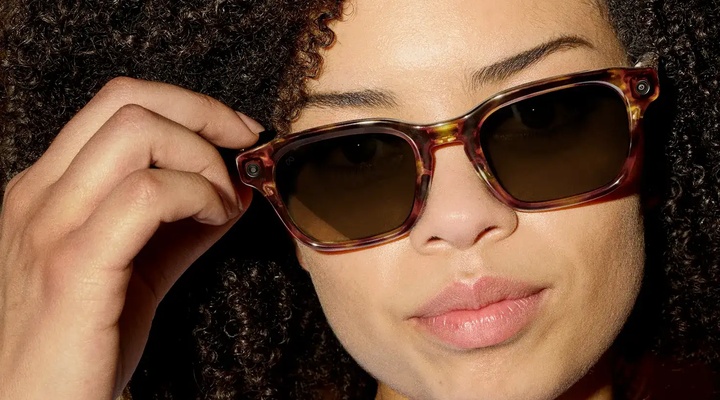
The real cost of Kmart’s camera glasses may not fall on the person who bought a pair. Kmart put them on shelves in late July under its Anko label. Simple black frames, clear lenses and nothing about them that tells you what they actually are. Eight-megapixel stills, 1080p video, a mic, speakers, and an AI assistant running through an app called HeyCyan. Then, within the first week of August, they had completely sold out online and across all stores. But here’s the thing I keep coming back to
ack to. Nothing about that decision was really that strange. The category is real, the price is sharp and the demand was already sitting there waiting for somebody to serve it. I’ve been in enough ranging meetings over twenty-five years to know how that one went, and a lot of the time they go the same way: will it sell, and does the margin work for us?
Clearly, both answers were yes. There’s a very good chance I would have signed it off, too. That’s the part that’s absolutely worth sitting with. It’s not the outrage we are seeing.
The two questions we ask
The person who buys those glasses gets a cheap bit of tech, but the cost of them lands somewhere else entirely. It lands on the woman in the change room at the other end of that store, on the person across the food court who can no longer tell whether they’re being filmed or not, or on a parent at a playground doing that quiet bit of arithmetic about a stranger’s glasses they see.
Not one of those people bought anything, and yet all of them now hold a position on Kmart.
Retail’s entire trust model assumes there are two parties in the room – us and the customer – and every instrument we’ve built sits on that shape. Sell-through, conversion, comparable sales, NPS, category performance. All of them can only see people who came to us.
What this means is that when a product’s cost falls on somebody standing outside the transaction, our dashboards don’t flag it as a problem. They just flag the win, and the win is real. Sell-through was excellent.
The warning wasn’t ignored; there’s simply nowhere for it to appear.
What this looks like three years on
If you want to know where the Anko decision goes, don’t argue about it with me – just go and look at the brand that got there first.
EssilorLuxottica sold more than seven million Ray-Ban Meta glasses in 2025, up from around two million across the two years before it, and AI glasses revenue nearly doubled again in the second quarter of this year. It hasn’t even eaten the core either. Traditional sunglasses and prescription Ray-Ban glasses both grew by double digits alongside it, so on every commercial measure available, that partnership is one of the strongest brand extensions modern eyewear has ever produced.
Now the other column.
A proposed US class action filed in March alleges the glasses were marketed with privacy assurances while some user footage could be viewed by human reviewers in Kenya. The UK’s Information Commissioner’s Office began making enquiries, while Kenya’s data protection regulator launched an investigation. In February, The New York Times reported on an internal Meta facial recognition feature that could allow wearers to identify strangers on sight. Two months later, more than 70 civil liberties, domestic violence and advocacy organisations signed a letter urging Meta to abandon the feature. In July, New York’s court system banned smart glasses from more than 1,240 courts. The Electronic Frontier Foundation has told consumers to think twice before buying a pair. Apple, meanwhile, is reportedly planning to unveil its own smart glasses in 2027, with privacy expected to be a key point of differentiation from Meta’s Ray-Bans.
Now, both columns are true at the very same time. Revenue is climbing, and the brand is being redefined by its own competitors as the thing not to be. However, only one of those appears on a report that gets circulated internally.
A 90-year-old brand built on the pleasure of being looked at now makes the object people don’t want to be looked at by. I want to be really fair about this: Ray-Ban didn’t choose that. Meta’s product roadmap chose it for them. Ray-Ban is simply the name on the eyewear’s temple when a stranger is deciding how to feel.
The implication for any retailer reading this is, and should be, uncomfortable, because Ray-Ban’s numbers looked exactly like Kmart’s numbers look right now.
It was never about glasses
Apple sold AirTags on convenience – your keys, your luggage, your bike. The cost landed almost entirely on people who never bought one and never agreed to be tracked, and the anti-stalking alerts only arrived after the harm was made public.
Again, super-strong sell-through, but harm outside the transaction. The fix was built after the pressure rather than before the launch. Same shape, different category and years earlier. And the craziest thing was nobody in retail wrote it down as a valuable lesson. Why? Because it wasn’t our category. That was Apple’s problem.
What trust actually does
Here’s the definition I continue to argue for and build with the brands I work with. A brand you trust is a brand you’ve stopped auditing.
That’s the commercial job trust performs: it removes verification cost. There’s no hesitation, no second opinion, no reading of the fine print and no quick search before committing. When a brand has it, buying is frictionless in a way no amount of media spend will ever replicate, and that is exactly why it converts.
Which means the damage from a trust event is not the customers who leave. it’s the customers who start checking again. They still buy you. They just buy you much slower now, with even more scrutiny and at less of a premium. Again, not one of them will ever show up in your reporting as a lost sale.
Trust also doesn’t break on outcomes. It breaks on revealed intent. People are not keeping a scorecard of your performance. They’re holding a model of what you would do if it were profitable and nobody was watching. “We got this wrong” survives that model; “we knew and we went anyway” does not.
The most expensive document in the whole Ray-Ban story isn’t a lawsuit. It’s the internal memo The Times reported – the one where Meta’s own team saw the backlash coming and noted the timing suited them because the groups most likely to object had their attention elsewhere.
That isn’t a company being caught out. That’s a company confirming the model people already had of it.
The cost or bill then turns up in two places, and retention is neither of them. It’s pricing power and it’s latitude. How much premium you hold, and how much benefit of the doubt you’re given the next time you stumble. Both of these erode in silence, and both look completely fine right up until the very day you need them.
So if you want a read on where you actually sit, stop asking people whether they’d recommend you and start asking what happens to your volume when you’re 8 per cent more expensive than the other guy.
Trust is a feeling you build through brand behaviour after you make the statement. It’s a cost your customer no longer has to pay.
The problem with a free signal
A trust signal only counts if it costs you something you’d rather have kept. Declined revenue, a launch you held, a range you walked away from. That’s the entire mechanic, because cost is the only thing that makes a signal impossible to fake, and impossible to fake is the only thing that carries real information.
So we reach for the free version instead – the values, the pledge, the privacy commitment. And the free version doesn’t just fail to work. It manufactures the exposure. Meta marketed those glasses as designed for privacy, and that sentence is now the foundation of the litigation against it. Saying nothing at all would have been safer than saying something it hadn’t earned.
Which brings this down to one line I’d want every retailer in this country to sit with for a while. Walking away from eighty-nine dollars of margin on a product you can’t stand behind is the cheapest trust asset available in Australian retail right now, and almost nobody’s buying it.
It’s not that we’re cynical. It’s because trust has no owner. It sits smeared across buying, legal, marketing and operations, it appears in nobody’s number, and so it loses every internal argument to a department that has one.
Sell-through has a champion. Margin has a champion. The woman in the change room has nobody in that room at all.
Let’s be clear here about something before I take the other side of this seriously. The woman in that change room isn’t an externality, and she isn’t a rounding error sitting under a margin line. She’s a person who walked into a store and got filmed by somebody who paid eighty-nine dollars for a camera nobody could see. There’s no sell-through number that makes that all right, and I’m not going to pretend there’s a version of this argument where it becomes all right.
And I’m not talking about the buyers here either. Most people who bought a pair want to film their kids at the beach without holding a phone up in front of them, and they are not the problem in any of this. The problem is that we put the thing on a shelf without anyone in the room asking who else was going to pay for it.
So the argument against this
Camera phones were a scandal in 2003 and unremarkable by 2008. If glasses run the same course, then Kmart read the market early and everybody objecting now looks precious. That’s a very real possibility, and I’m not going to pretend otherwise.
But I will say the two aren’t the same thing. A phone camera clearly announces itself. The gesture is legible and consent gets negotiated very much out in the open. Glasses, however, remove the tell. Normalisation works when the discomfort is about novelty, and this discomfort isn’t. It’s about not being able to tell.
The biggest challenge I see is there’s nothing arriving to resolve it either, because Australian privacy law governs organisations collecting data, not individuals quietly filming strangers in a shopping centre. Monash researchers surveying more than a thousand Australians found around one in seven smart glasses owners admitted using them in ways they knew were dangerous. That’s literally owners describing their own behaviour, not a hypothetical about bad actors.
Normalisation resolves novelty. It doesn’t resolve ambiguity.
The new range question
The range question we’ve always asked is: will it sell, and does the margin work? That question alone isn’t enough anymore. The new one we must ask ourselves in retail is: who carries the cost of this, and is that person a customer of ours?
If the answer to the second half is no, you haven’t found a product; you’ve found a liability with excellent sell-through, and the invoice arrives later from people you never sold anything to.
Further reading: Why Meta just traded its most powerful fashion credential for its own name


